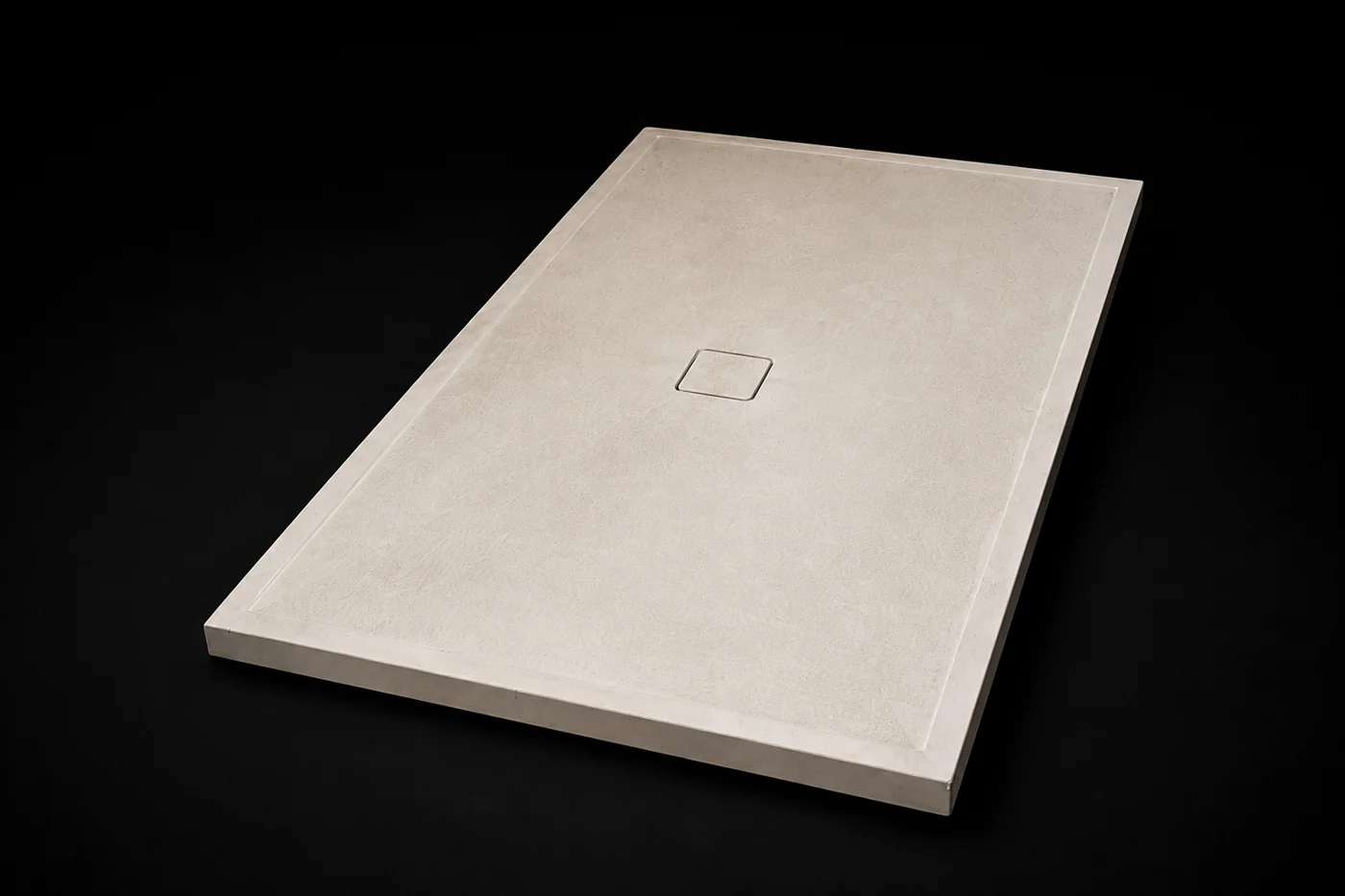
Shower Trays
Custom pre-sloped foundations designed around project dimensions, drain requirements and installation details.
Explore shower trays →

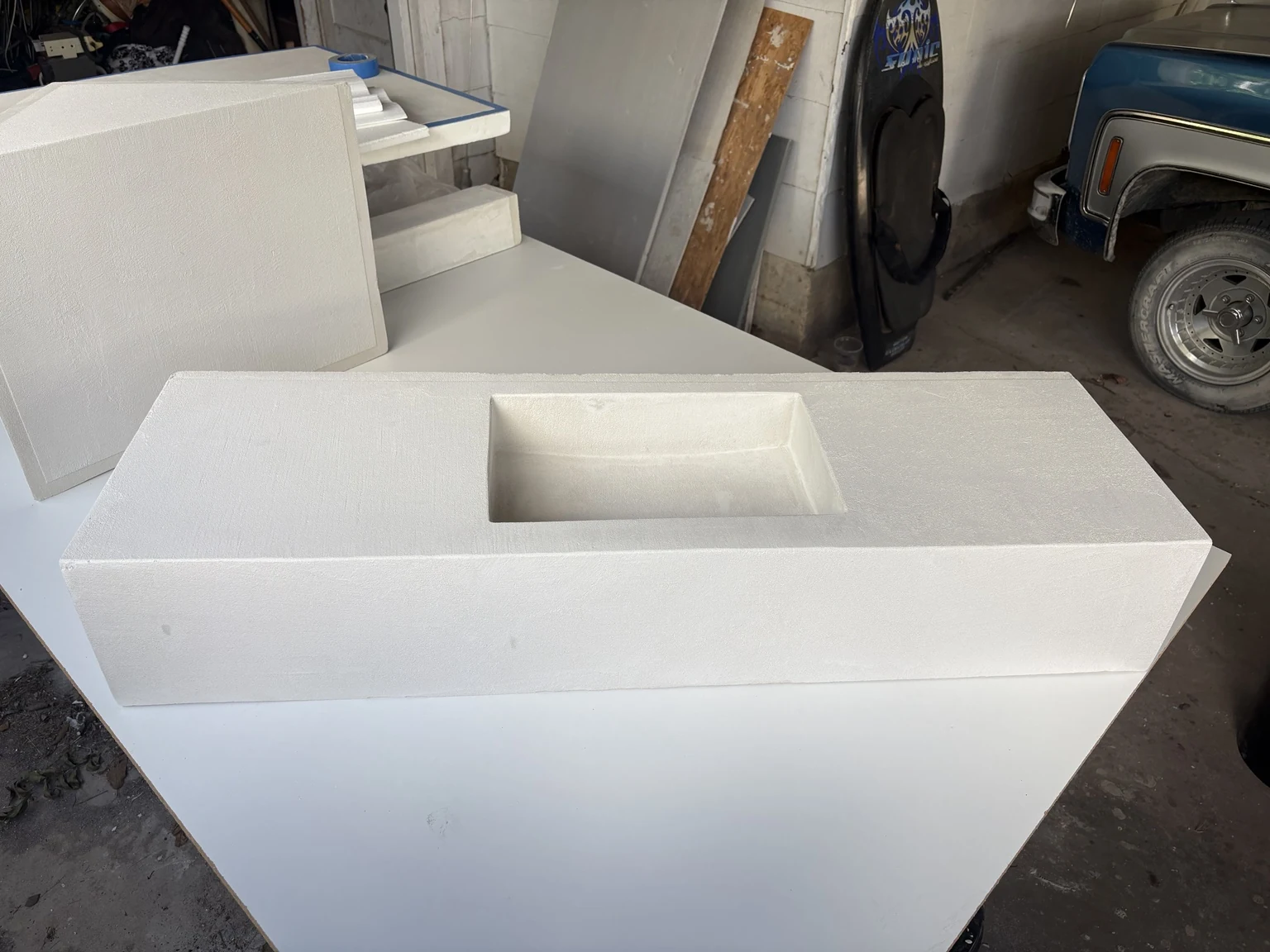
Microtex by Texcrete Designs brings project-specific fabrication into the shop. Lightweight, hard-coated EPS components create the shapes beneath a microcement finish, from pre-sloped shower trays and benches to integrated vanity forms and custom architectural pieces.
The goal is bigger than one shower tray. We are developing a family of components that gives installers, builders and designers more freedom while reducing difficult fabrication in the field.
Custom pre-sloped foundations designed around project dimensions, drain requirements and installation details.
Explore shower trays →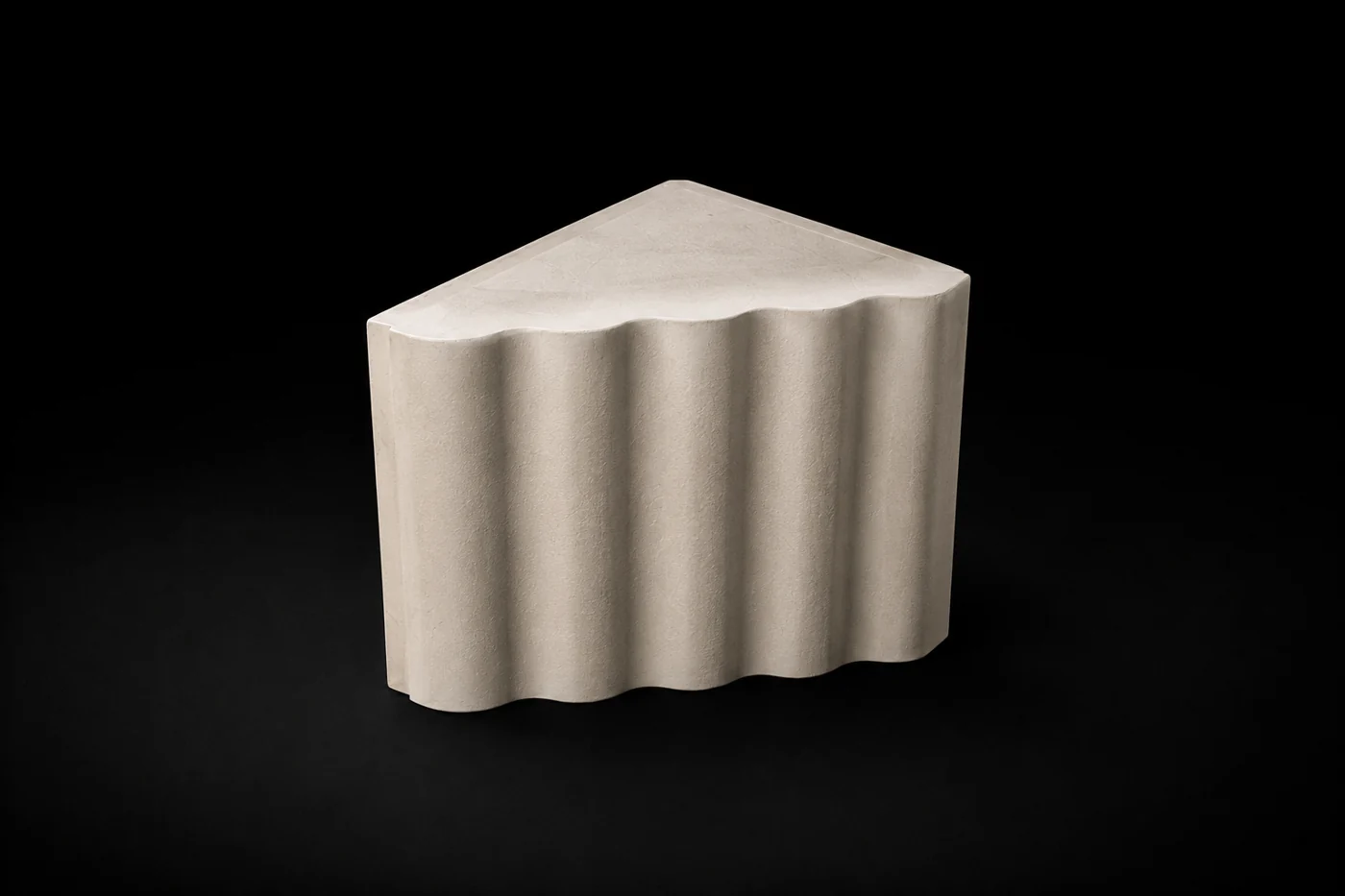
Lightweight fabricated components for clean, integrated shower geometry without building every form from scratch onsite.
Explore components →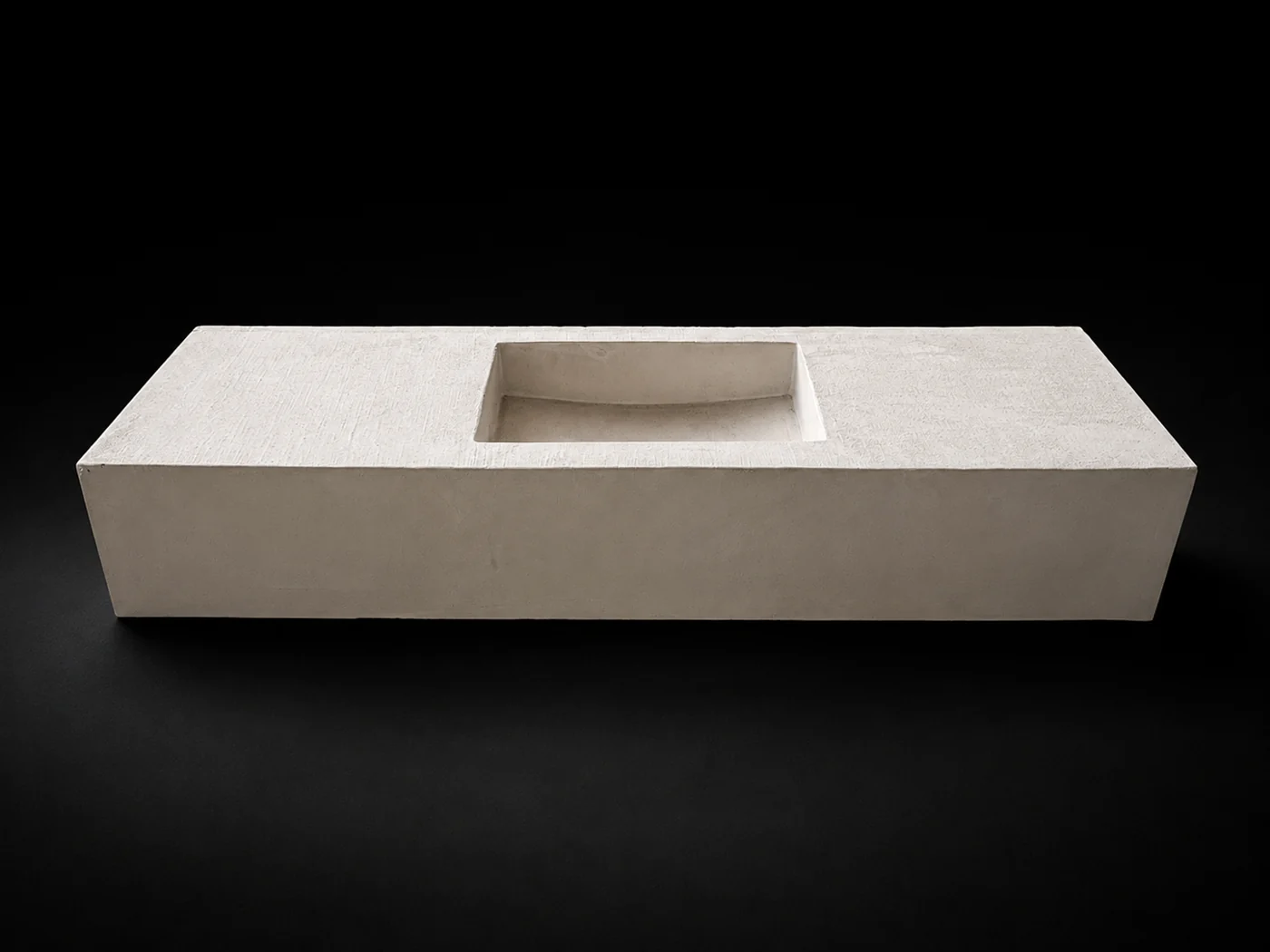
Integrated sink forms, vanities and architectural pieces that expand what can be created with a continuous microcement finish.
Explore vanities →Microcement is the finish. But before the finish can begin, someone still has to create everything underneath it.
On our own projects that meant building shower slopes, integrating drains, forming curbs and benches, creating vanities and sinks, solving transitions, reinforcing assemblies, and adapting every detail to the realities of the jobsite.
After years of doing that work, the question became unavoidable: why are we still building every critical component from scratch in the field?
Microtex grew from that question. We began moving the difficult shaping and fabrication into our shop, where components could be designed around actual project dimensions, CNC cut, assembled, reinforced, hardened, prepared for microcement, and checked before they ever reached the jobsite.
Tile contractors have spent decades working with engineered systems and components from companies such as Schluter, Wedi and Laticrete. Those systems changed how showers and other assemblies are planned, built and installed.
Microtex is pursuing that same fundamental idea for microcement: move critical parts of the installation away from improvised jobsite fabrication and toward a coordinated family of components designed around the way microcement is actually installed.
Not a tile system adapted to microcement. A system being developed from the microcement installation outward.
Microtex did not begin as a foam product or a manufacturing exercise. It began with installations—and with the recurring details that consumed time, introduced variables, or simply deserved a better solution.
Start with the actual dimensions, drain location, geometry and installation requirements of the project.
Use lightweight EPS and controlled fabrication to create slopes, forms and custom geometry accurately.
Turn the shaped core into an architectural component engineered for the demands of the complete assembly.
Prepare the component around reinforcement, transitions and the requirements of the finish that will ultimately cover it.
EPS makes lightweight custom fabrication possible, but the foam itself is not Microtex.
The value is the combination of project-specific design, CNC shaping, assembly, reinforcement, hardening, surface preparation, integration details and product guidance from people who understand the microcement installation that comes next.
That distinction matters. A component should not merely be easy to ship or quick to install. It has to make sense as part of the complete system.
Every Microtex idea starts with practical questions: How will the installer handle it? How does it meet the surrounding assembly? Where does reinforcement belong? How will the finish transition? What happens at the drain? What can go wrong?
Those are installer questions. They are also why Microtex exists.
Our long-term goal is to give the microcement industry something it has largely had to create project by project: a practical family of components, installation knowledge and professional resources developed around the realities of the work.
Microtex will continue to evolve as we build, test, install and listen to the contractors using it. The objective is simple: solve real installation problems and make high-level microcement work more repeatable.