Complete shower assemblies
Work through substrates, preparation, waterproofing principles, drainage, corners, niches and finish application at six individual shower stations.


Learn complete microcement installations with Bart and Haily Randolph. Four days of hands-on work at our New Braunfels facility, with six full shower stations, small classes, business training and continued technical support.
Four-day certification · Lunch and drinks included · Availability confirmed when you register
Work through substrates, preparation, waterproofing principles, drainage, corners, niches and finish application at six individual shower stations.
Bart’s trade background began in 1988. He and Haily bring installation knowledge and hands-on guidance to the classroom.
Learn estimating, pricing and project planning. Continue to reach out to Bart with technical questions after class.
A beautiful finish means very little if the assembly beneath it is wrong.
Microcement US was created to teach the complete installation process: what you're building over, how to evaluate it, how to prepare it, how wet-area assemblies work, how reinforcement and base coats support the finish, and how to recognize problems before they become callbacks.
The goal is not for you to leave knowing how to copy a sample board. The goal is for you to understand what to do when the real jobsite does not look like the sample board.
Evaluation, preparation, movement, transitions, and knowing when the surface in front of you is not ready.
Waterproofing principles, drainage, shower geometry, niches, benches, curbs, floors, and critical transitions.
Primers, reinforcement, base coats, finish technique, sanding, sealing, repairs, and troubleshooting.
Estimating, pricing, client expectations, sales, marketing, workflow, and building a service that is actually profitable.
Our New Braunfels training facility is built around six individual practice showers so students work through the same kinds of details that make real installations difficult.
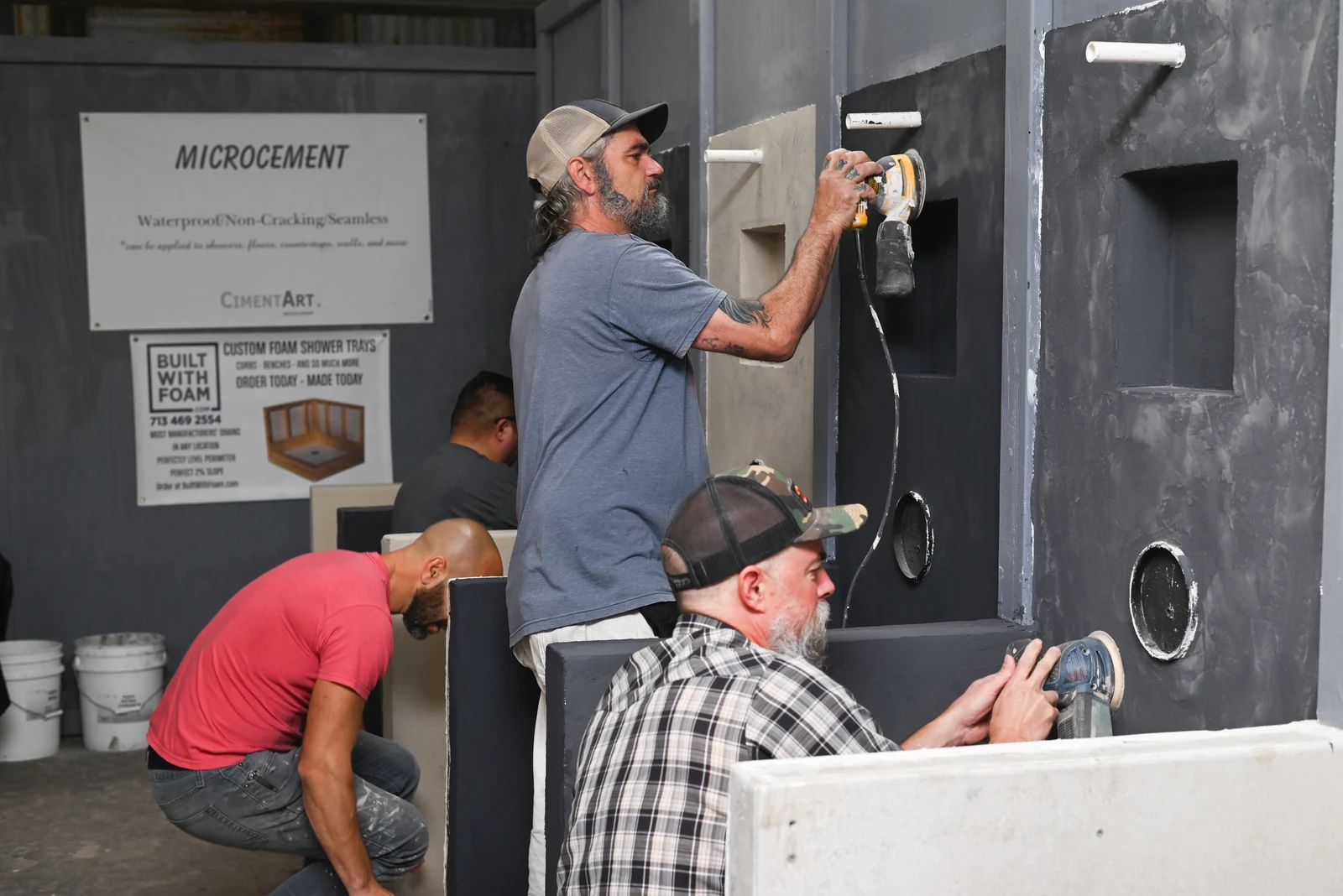
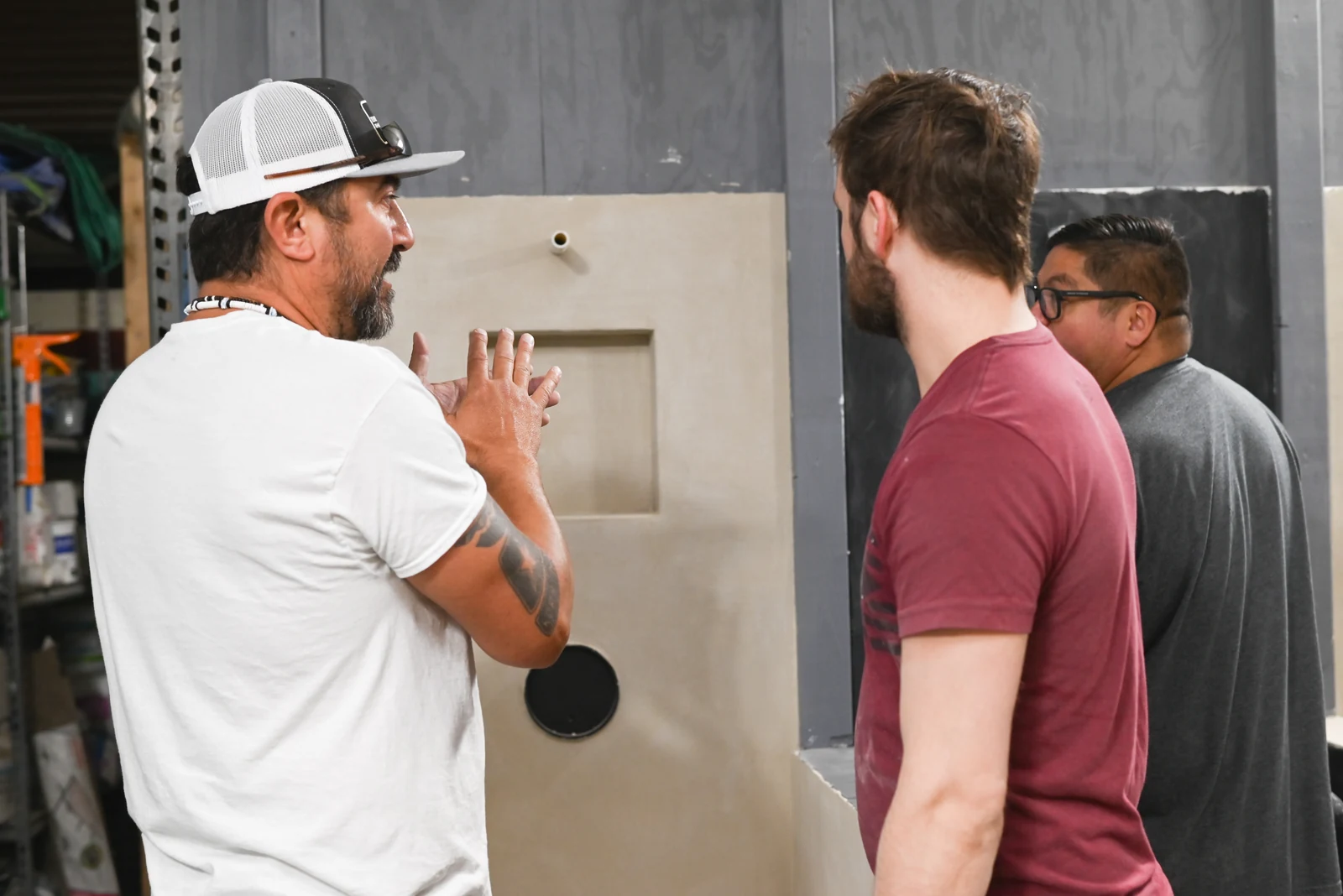
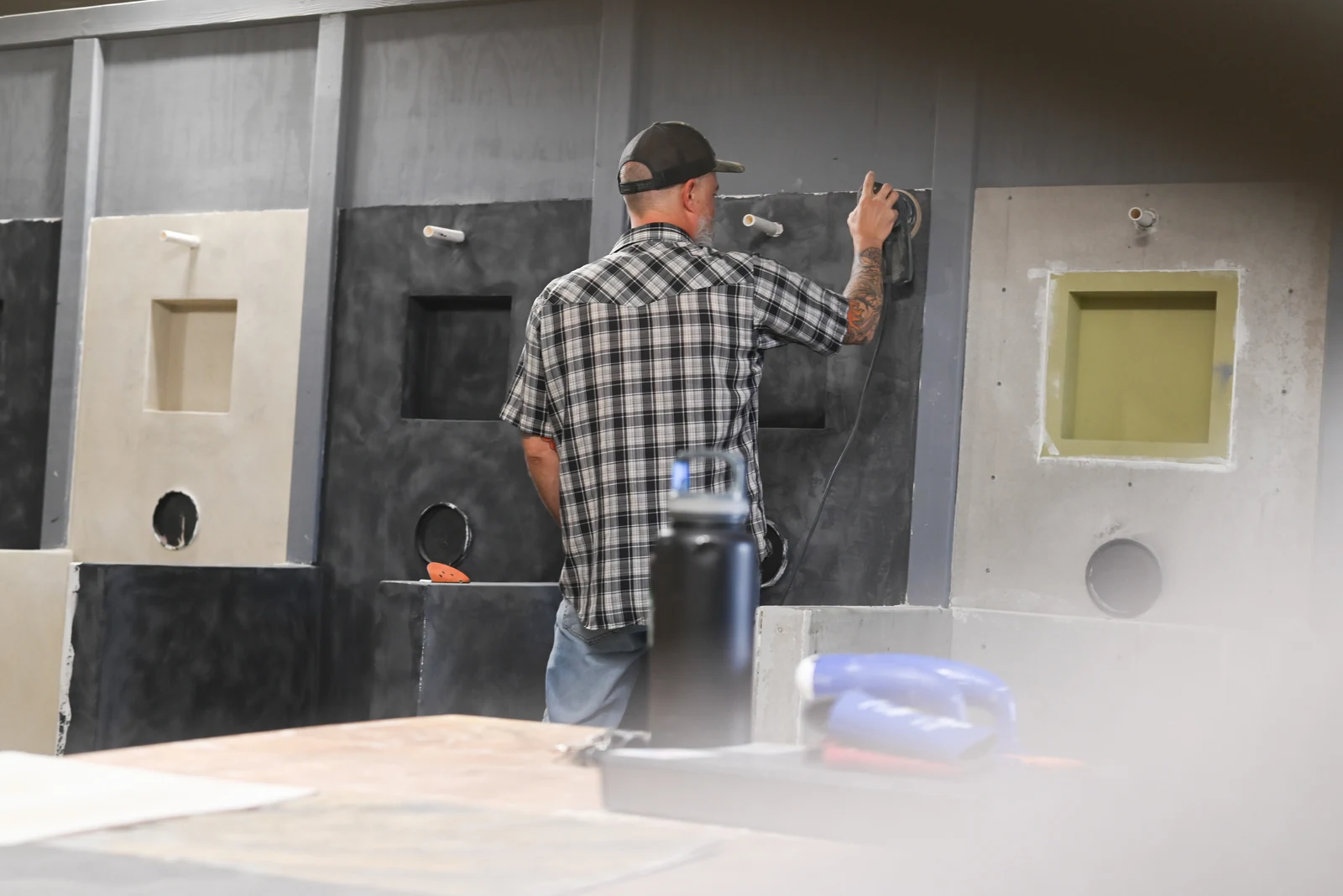
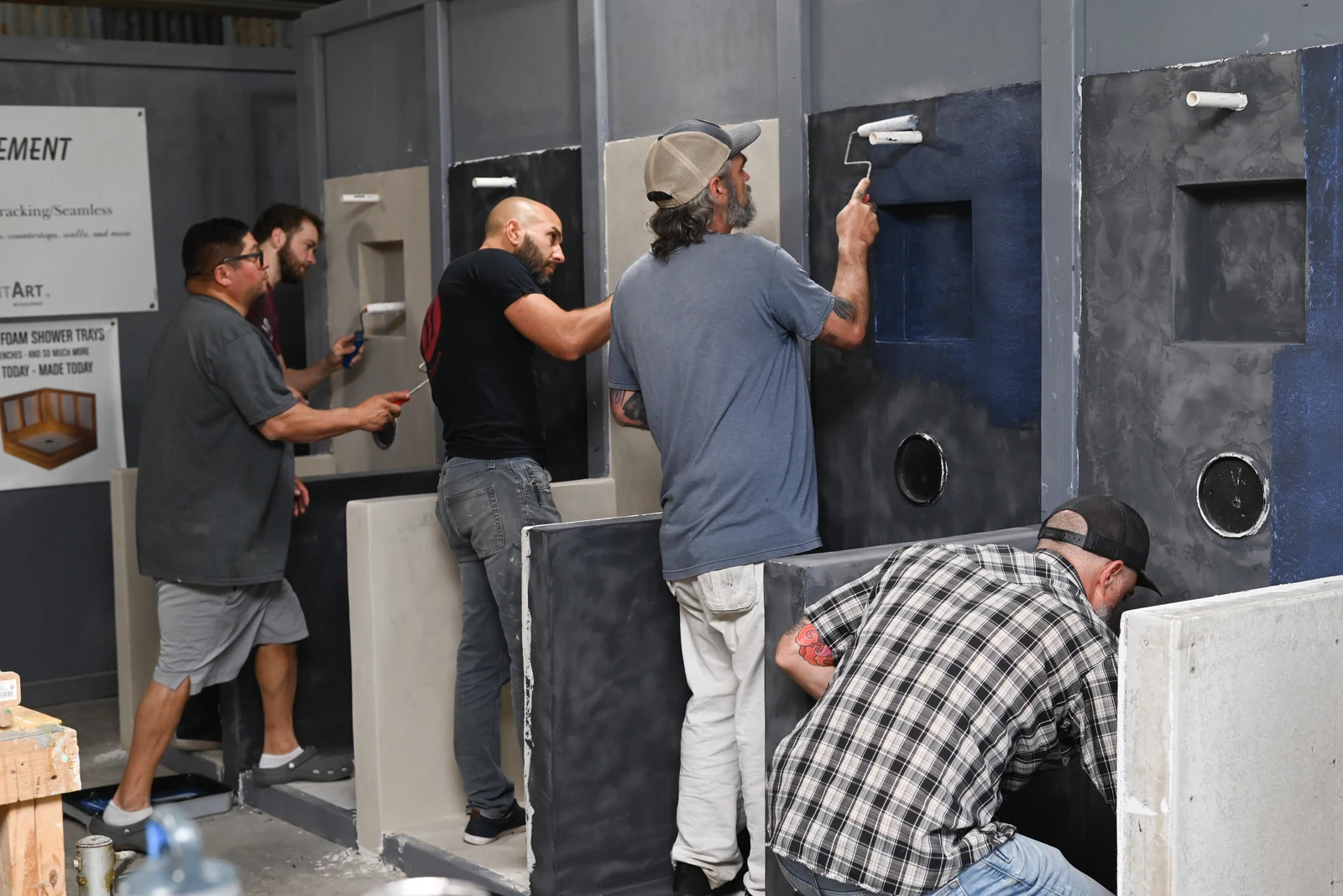
Floors, corners, niches, transitions, benches, complex shapes, and sequencing—not just open wall panels.
You mix, apply, sand, correct, and finish the work yourself under direct instruction.
Small classes mean problems can be discussed while they are happening, not after the work is already finished.
Microcement isn't something Bart Randolph learned so he could teach it. It's part of the work he still does.
Bart continues to estimate projects, evaluate substrates, solve field problems, install microcement, fabricate Microtex components, test new ideas, and support contractors after training. The questions discussed in class come from real jobs—not a fixed demonstration script.
His perspective is rooted in the trades: masonry vocational training, a tile apprenticeship beginning in 1988, decades of installation experience, GFRC fabrication, custom architectural work, and years focused on microcement.
You're not learning from a salesperson. You're learning from a tradesman who still does the work.
Memorizing a sequence works until the conditions change. Understanding the reasoning behind the system lets you make better decisions when they do.
That is why the course goes beyond application technique. Students learn how the layers relate to one another, what each step is accomplishing, and where failures usually begin. The objective is judgment—not memorization.
“We don't measure the success of our training by whether you can make a sample board look good on Thursday afternoon. We measure it by whether you understand what to do when you're standing on a real jobsite Monday morning.”
Most people who invest four days and $2,500 in training are not looking for a hobby. They want to add microcement to a real business.
That is why the program includes estimating, pricing, positioning, client communication, sales, marketing, and practical business decisions alongside the technical curriculum.
You should leave with a stronger understanding of both how to install microcement and how to sell the work responsibly and profitably.
Students are also introduced to Microtex—the component system Texcrete is developing from years of field experience. That means training is connected directly to the same product development and installation problems being solved in the shop.
This is not a static curriculum. The program evolves as Texcrete learns, tests, installs, and improves.
No four-day course can reproduce every condition you will eventually encounter. Certified contractors retain direct access to Bart for technical questions after training.
That ongoing access is intentional. When you run into the substrate, transition, repair, or field condition you have never seen before, you should have someone experienced to call.